Mass grading vs. rough grading: what's the difference
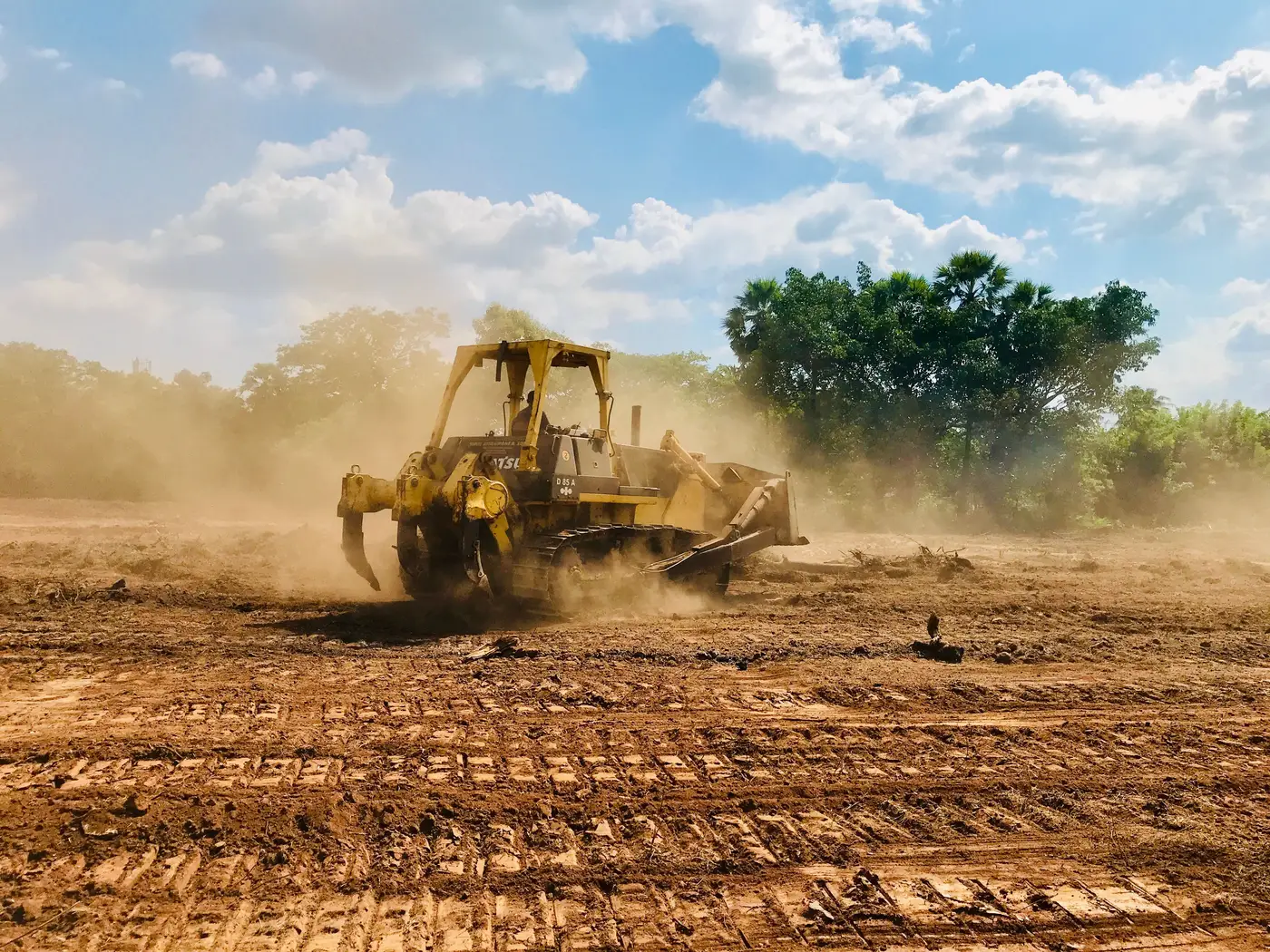
If you cover territory for a supplier or OEM, you've probably heard both terms used loosely on the same jobsite walk. A super says "we're mass grading next week" and a PM says "rough grade starts Monday" about the same parcel, and they're not contradicting each other. They're talking about two different scopes that happen back to back and get blurred in casual conversation.
Getting the distinction right matters more than it sounds like it should. If you're timing a call around "grading," you need to know which grading, because the equipment on site, the crew size, and the buying window all shift between the two.
Rough grading definition
Rough grading is the work that brings a site to within a few tenths of a foot of the design subgrade elevation shown on the civil plans. It happens after the pad or building footprint has its general shape established, and it sets up the surface for utilities, foundations, and paving base. A dozer and a grader doing rough grade are chasing a specific elevation, not just moving dirt in bulk.
Rough grade sets the structural surface underneath everything that follows. Finish grade, the surface a landscaper or paving crew shapes later, is a separate pass with its own tolerance. Tolerances get tighter as the project moves from mass grading into rough grading, and tighter still once it hits finish grade.
Where mass grading ends and rough grading starts
Mass grading is the bulk move: cutting high spots, filling low spots, and reshaping the overall pad to match the site's cut-and-fill balance. This is scraper and haul-truck territory, moving yardage across the parcel or trucking it off site if the balance doesn't work on paper. Mass grading doesn't care about final elevation within a few inches. It cares about getting the overall earthwork volume where the civil engineer calculated it needs to be.
Rough grading picks up once that bulk shaping is done. The dozer and grader fleet shrinks, GPS-guided blades start chasing design elevation, and the pace of yardage moving per day drops off even as the precision goes up. If you're watching equipment counts on a site to gauge where a project sits, a drop from a half-dozen scrapers and haul trucks down to a couple of dozers and a motor grader is usually your signal that mass grading wrapped and rough grading is underway.
Earthwork phases in order
On a typical commercial or industrial site, the sequence runs roughly like this:
- Clearing and demolition: trees, brush, and any existing structures come out.
- Topsoil strip: the organic layer gets scraped and stockpiled for later reuse or hauled off.
- Mass grading: bulk cut and fill to establish the overall pad.
- Rough grading: fine-tuning the pad to design subgrade elevation.
- Utility trenching: underground wet and dry utilities go in once subgrade is set.
- Compaction and proof rolling: the subgrade gets tested and locked in.
- Finish grading: final surface prep ahead of paving, foundations, or landscaping.
That topsoil strip in step two is the moment that matters most if you're trying to catch a project early. It's the first visible change on a parcel that was bare ground the week before, and it happens well before anyone pulls a building permit sign or a crane shows up.
Why the phase matters for your call list
None of this changes what you're selling. It changes when you show up. A rep who waits for the mass grading fleet to roll in is already behind the GC's buying decisions on erosion control, aggregate, and early-stage equipment rental. A rep who knows topsoil got scraped on a watched parcel last week has a few extra days to get a call in before the site looks like a construction site to anyone driving past it.
That's the gap Earthworks Alerts is built to close: a dated alert the week topsoil breaks on a parcel you're tracking, with a before and after image so you know it's real before you pick up the phone.
If you've got a list of parcels you'd rather hear about the week they move than the week a competitor's rep already has a signed deal, that's the exact problem worth putting on a watch list.