Grading vs. clearing: reading an early-stage site image right
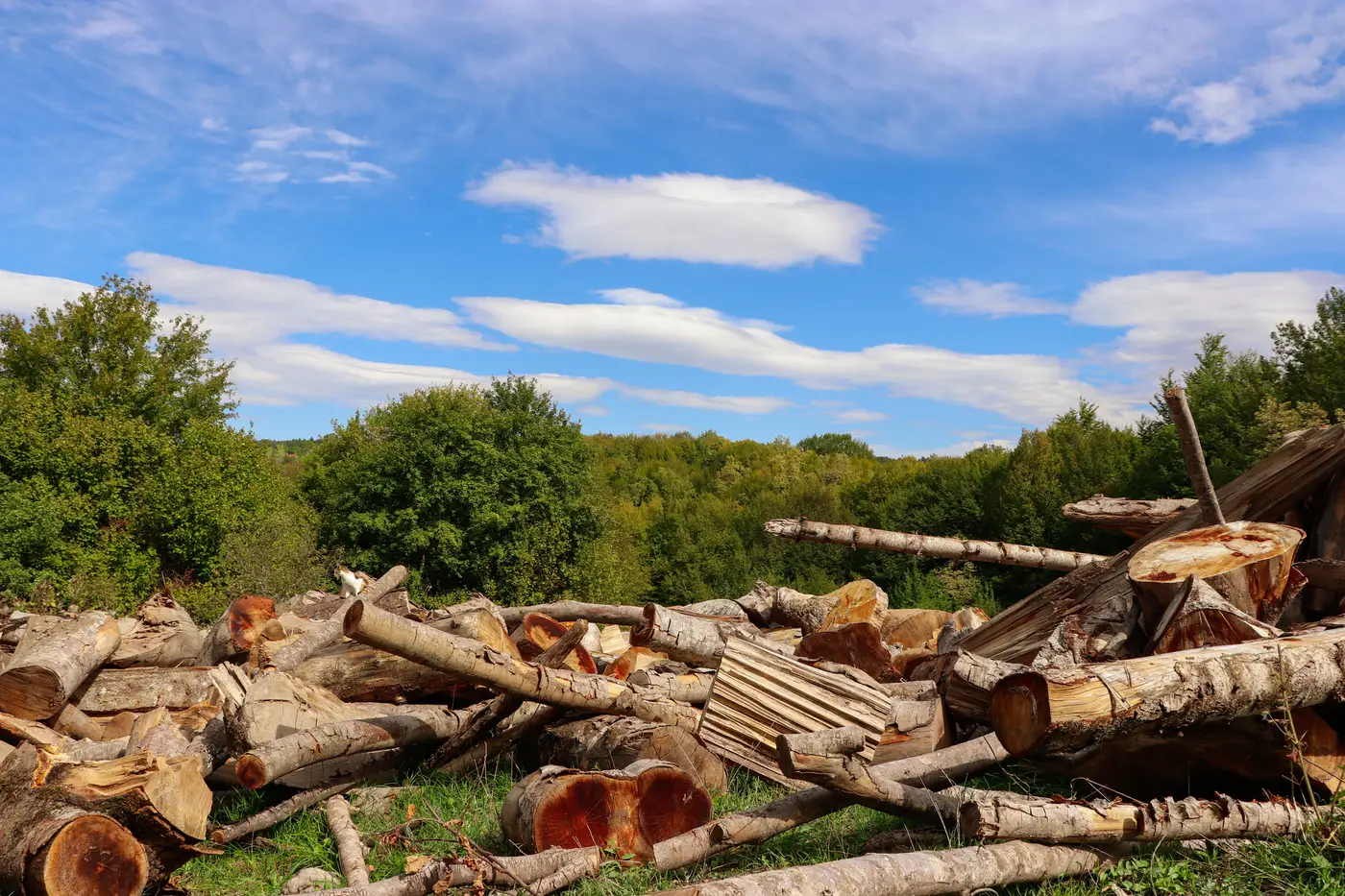
A parcel goes from green to brown on your weekly imagery pull and your first instinct is to call it in as a live job. Sometimes that's right. Sometimes a crew just pushed trees over and the dirt hasn't been touched yet. Those are two different sales windows, and mixing them up either burns a call too early or costs you a week you didn't need to lose.
What clearing looks like from above
Land clearing is the demo phase. Trees come down, stumps get pulled or left, and brush gets piled or burned. In a satellite frame, clearing reads as a patchy, irregular brown-and-gray mix sitting inside what used to be solid canopy. The edges are ragged because clearing crews work tree by tree and leave debris piles scattered across the footprint. You'll often see a faint grid of skid trails where equipment dragged logs out, thin lines cutting through the cleared area at odd angles. Stump holes and root wads throw shadows that make the surface look rougher than graded ground, almost textured compared to the smooth tone you get once a dozer has worked the pad.
Clearing on its own doesn't mean a contract has been let for sitework. A landowner clears for timber value, a developer clears speculatively ahead of financing, or a utility clears a right-of-way that has nothing to do with the building pad you're tracking. Seeing bare ground where trees used to be tells you someone's moving. It doesn't tell you the earthwork package is out to bid.
What grading looks like once dirt moves
Grading is a different signature. Once a dozer or scraper starts cutting and filling, the surface flattens out and the color goes uniform, a clean tan or rust depending on the soil. The ragged stump-and-pile texture of clearing disappears because the topsoil's been stripped and the subgrade is exposed and compacted. You'll usually pick up straight edges now instead of ragged ones: a rectangular pad outline, cut slopes with visible benching, a haul road running to the right-of-way, sometimes a staging or laydown area already scraped separate from the main pad. Silt fence, if it's up, shows as a thin dark line tracing the disturbance limit, and that line is one of the more reliable tells that someone's pulled an NPDES permit and started moving dirt for real.
Clearing reads messy and organic, grading reads geometric and uniform. If the brown patch in your image still has visible piles, stumps, or a feathered edge into the treeline, you're probably looking at clearing. If the patch has hard edges, a flattened tone, and some sign of equipment tracking in straight lines, dirt's moving.
Why the distinction matters for your call list
Reps who get this wrong tend to err in one of two directions. Some call every cleared lot as a live job and end up pitching GCs who tell them nothing's scoped yet, which burns trust for the next call. Others wait for a grading signature so unmistakable that a competitor's rep has already been on site twice. The window you actually want sits between those two: cleared enough that you know a project's real, watching closely enough that you catch the first week dirt starts moving instead of the fourth.
That's the part that's hard to do by eye, because nobody on your team is pulling fresh imagery on every parcel in the territory every week and comparing it to last month's shot. Earthworks Alerts does that comparison for you and sends a dated alert with a before/after pair the week topsoil gets scraped, which is the signal that separates a cleared lot sitting idle from a site that's under dirt.
If you'd rather get that alert than keep squinting at brown patches trying to guess which ones are which, see how the weekly scrape alerts work.