Demolition clearing vs. new-build site prep: reading the difference from above
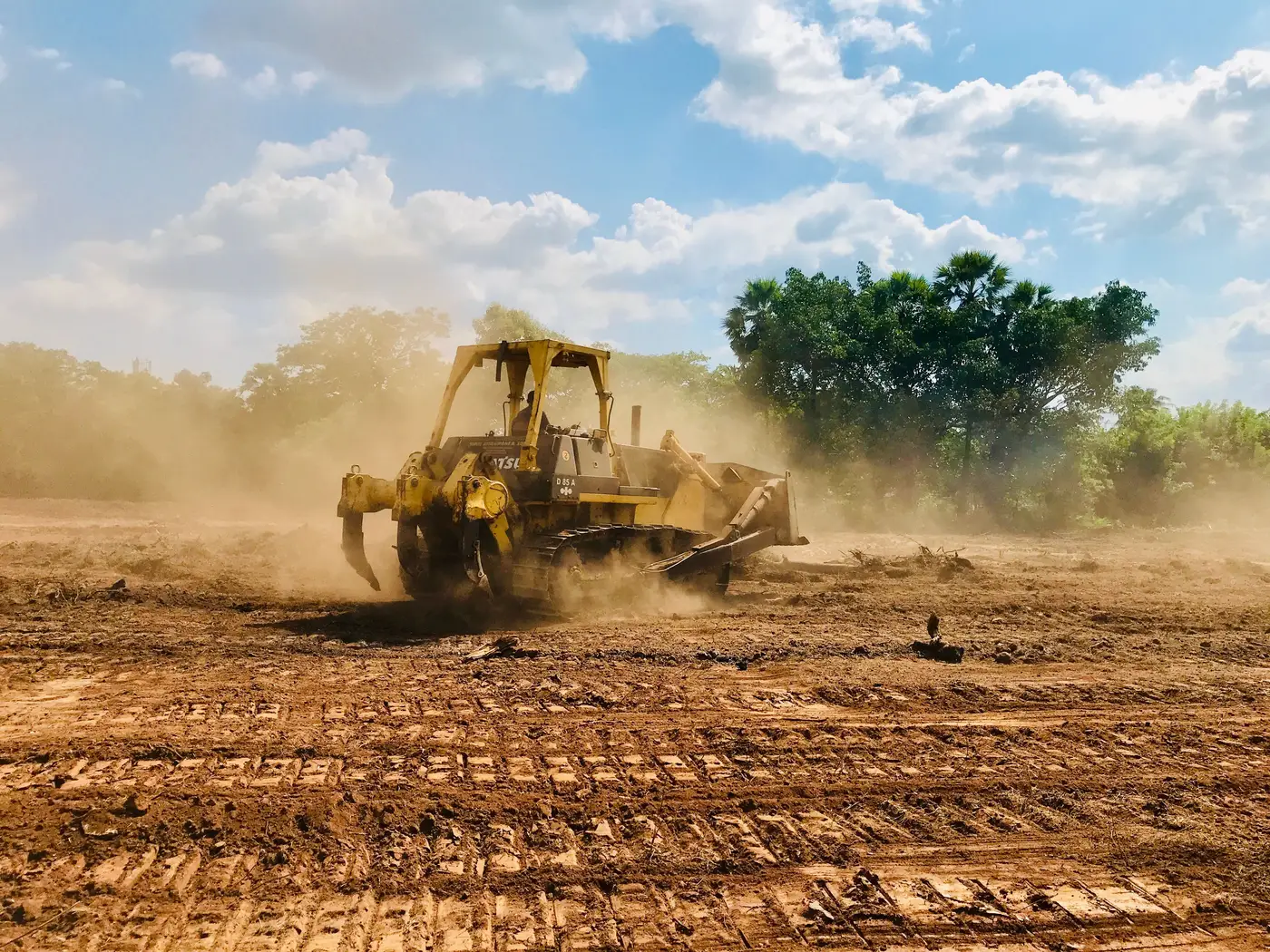
A parcel you've had on your list for six months finally shows movement in the latest pass. Dirt is turned, something's different from last week's image. Before you pick up the phone and tell your manager a job just broke ground, you need to know what you're actually looking at. A demo crew taking down an old building and a grading crew starting cut-and-fill on a new pad can look almost identical in a single frame. They are not the same call, and they are not the same timeline for when you show up with a quote.
The footprint tells you what came before
Start with what was on the parcel in the prior image. If there was a structure, a strip mall, a warehouse, a house, and it's gone or partially gone now, you're looking at demolition. The signal is a shrinking building footprint against the old structure's outline. You'll usually see debris staged near that footprint: dark, irregular piles that don't match the tan or gray of exposed subsoil, plus roll-off boxes or a line of haul trucks along the access road.
If there was no structure before, bare lot, pasture, timber, row crop, and now there's exposed earth, you're looking at a scrape on raw ground. It reads differently from a demo site even when both show "disturbed earth" to a quick eye, because there's no old footprint shrinking, just open ground turning over.
Color and texture separate rubble from dirt work
Debris doesn't look like graded soil. Demolition rubble shows up blotchy and dark, broken concrete, shingles, scorched framing, often still piled rather than spread. A genuine site prep scrape shows a uniform color shift, vegetation green or crop-row texture giving way to flat tan or gray subsoil, usually with visible equipment tracks or a swept, graded pattern rather than a heap.
Silt fence is the other giveaway. Erosion control lines appear fast on a real grading job, thin bright borders tracing the disturbed area, because the civil contractor needs them before the first cut passes inspection. Demo sites rarely bother with silt fence around a slab that's just being broken up and hauled off.
Demo clearing can sit still for a long time. Dirt work usually doesn't
This is the part that trips up a lot of reps watching a parcel week to week. A teardown can finish and then the lot just sits there, flat and empty, for months or years waiting on financing, entitlements, or a tenant. Nothing changes image to image.
A real groundbreak signal almost never behaves that way. Once a crew scrapes topsoil on a new build, the next few weekly passes usually show more activity: cut-and-fill contours forming, a detention pond taking shape in one corner, maybe forms or footings by week four or five. Momentum is the tell. A demo clearing goes quiet. A new-build scrape keeps moving.
A quick way to sort it before you call it
Before you treat a change as a project moving to build, run it against three checks: was there a structure on the parcel before, is the disturbed area debris-colored or dirt-colored, and is the site still changing in the next pass or two. A teardown with no follow-up activity for weeks is still worth watching, but it's not yet a scrape you'd stake a sales call on. A raw-ground cut with silt fence going in and contours changing week over week is the real thing.
Catching that difference consistently, parcel after parcel, across a territory, is the part that gets tedious fast when you're doing it by eye on whatever imagery you can find. Earthworks Alerts runs a weekly change read against the parcels you're tracking and sends a dated alert with the before-and-after pair the moment topsoil gets scraped, so you're not guessing which kind of disturbed ground you're looking at.
If you'd rather get the alert than reread last week's image for the tenth time, that's what it's built for.